brandinfection.com [via monochrom]
Code v.2/CC-Wiki License
Lawrence Lessig first published Code and Other Laws of Cyberspace in 1999. After five years in print and five years of changes in law, technology, and the context in which they reside, Code needs an update. But rather than do this alone, Professor Lessig is using this wiki to open the editing process to all, to draw upon the creativity and knowledge of the community. This is an online, collaborative book update; a first of its kind.
Once the project nears completion, Professor Lessig will take the contents of this wiki and ready it for publication. The resulting book, Code v.2, will be published in late 2005 by Basic Books. All royalties, including the book advance, will be donated to Creative Commons.
Ein Interview, in dem Lawrence Lessing auch über dieses Projekt spricht, ist in der Business Week erschienen.
Ausserdem wurde, um den Lizenzerfordernissen von Wikis besser gerecht zu werden, die neue Wiki License — Attribution-ShareAlike 0.5 eingeführt. Momentan ist diese aber lediglich als Diskussionsbasis zu sehen. Anmerkungen und Verbesserungsvorschläge können hier gepostet werden.
[via netzpolitik.org]
PDA Links
NewsForge: Synchronizing PalmOS devices with Linux.
golem.de: PocketWorkstation – Debian fürs Handheld (Man beachte: “Handheld” als Neutrum; zumindest in meinen Ohren geht das gar nicht). Das Projekt selbst findet sich unter pocketworkstation.org.
404
[link]
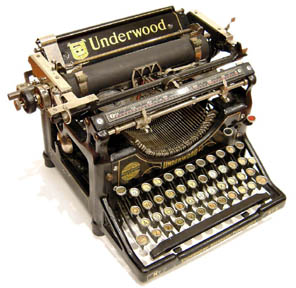
The Classic Typewriter Page
|
“The (QWERTY) keyboard was probably designed to separate frequently-used pairs of typebars so that the typebars would not clash and get stuck at the printing point.” |
[via Scheinriese]
Learn UNIX in 10 Minutes
[auf freeengineer.org via monochrom]
LEGO CubeSolver
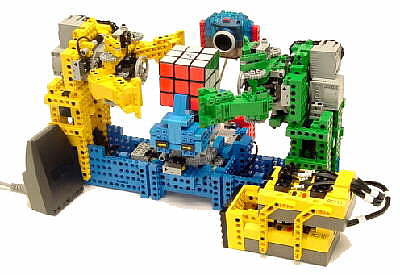
[via Hack A Day]
WordPress 1.5
Chris Lynch testet auf NewsForge WordPress im der neuen Version 1.5.
WordPress is a strong blogging platform and an exemplary open source application. With the launch of the new wp-plugins.org to further support the user community, and the general call for translators to internationalize WordPress, this is software that has the potential to go from strength to strength.
Da steht dann wohl auch beim Wiener Lloyd in nächster Zeit mal ein Update an!
CCCeBIT 2005
Dieses Jahr geht der CCCeBIT-Award als Anti-Preis an die Bundesdruckerei, wegen der geplanten Einführung der biometrischen Erkennungsmerkmale in Reisedokumenten verbunden mit unsicherer RFID-Technologie.
[beim CCC]
Filesharer in Frankreich freigesprochen
Man kann es nicht oft genug wiederholen: Raubkopierer¹ sind keine Verbrecher!
Ein französisches Berufungsgericht hat jetzt einen 22-jährigen Netznutzer freigesprochen, der sich nahezu 500 Filme aus dem Internet heruntergeladen hatte. Das Gericht entschied, dass die Downloads legale Privatkopien waren.
[Netzwelt via netzpolitik.org]
¹ Ich verwende diesen Terminus selbstverständlich nur in Anlehnung an die dummer Anti-Filesharing Kampagne der Filmindustrie. Natürlich hat ein Tauschbörsennutzer nichts mit einem Räuber gemein (vgl. Definition des Wortes “rauben” nach Duden: “gewaltsam wegnehmen, entreißen”).